
In today’s digital economy, speed is no longer a luxury — it is a competitive advantage. Businesses invest heavily in cloud computing, automation, AI, and digital transformation, yet many still suffer from an invisible performance problem: latency.
Latency quietly slows applications, disrupts customer experiences, delays decisions, and ultimately reduces revenue. Unlike system crashes, latency does not immediately attract attention — making it one of the most dangerous hidden threats to modern organizations.
This is why forward-thinking companies are now shifting toward Edge-Integrated IT Solutions to eliminate delays and unlock real-time performance.
What is Latency? (Simple Explanation)
Latency refers to the time delay between a user action and the system response.
For example:
- A customer clicks “Pay Now”
- Data travels to a distant cloud server
- The server processes the request
- The response returns to the user
Even a delay of 100–300 milliseconds can impact user behavior and business efficiency.
Types of Business Latency
- Network Latency – Delay in data transmission
- Application Latency – Slow software processing
- Data Latency – Delay in accessing databases
- Cloud Latency – Distance between users and cloud servers

Why Latency is a Silent Business Killer
Latency doesn’t always break systems — it slowly damages performance over time.
1. Poor Customer Experience
Users expect instant responses. Slow loading applications lead to:
- Higher bounce rates
- Cart abandonment
- Reduced customer trust
Studies show users abandon platforms that take more than 3 seconds to respond.
2. Revenue Loss in Real Time
Industries affected most:
- E-commerce
- Banking & FinTech
- Online booking platforms
- Streaming services
- SaaS businesses
Every millisecond delay can reduce conversion rates.
3. Slower Decision-Making
Businesses relying on centralized cloud processing experience delays in:
- Analytics dashboards
- IoT monitoring
- Operational alerts
- AI predictions
Delayed insights mean delayed action.
4. Increased Infrastructure Costs
Ironically, latency often forces companies to:
- Scale servers unnecessarily
- Increase bandwidth usage
- Overinvest in centralized systems
Without solving the root cause.
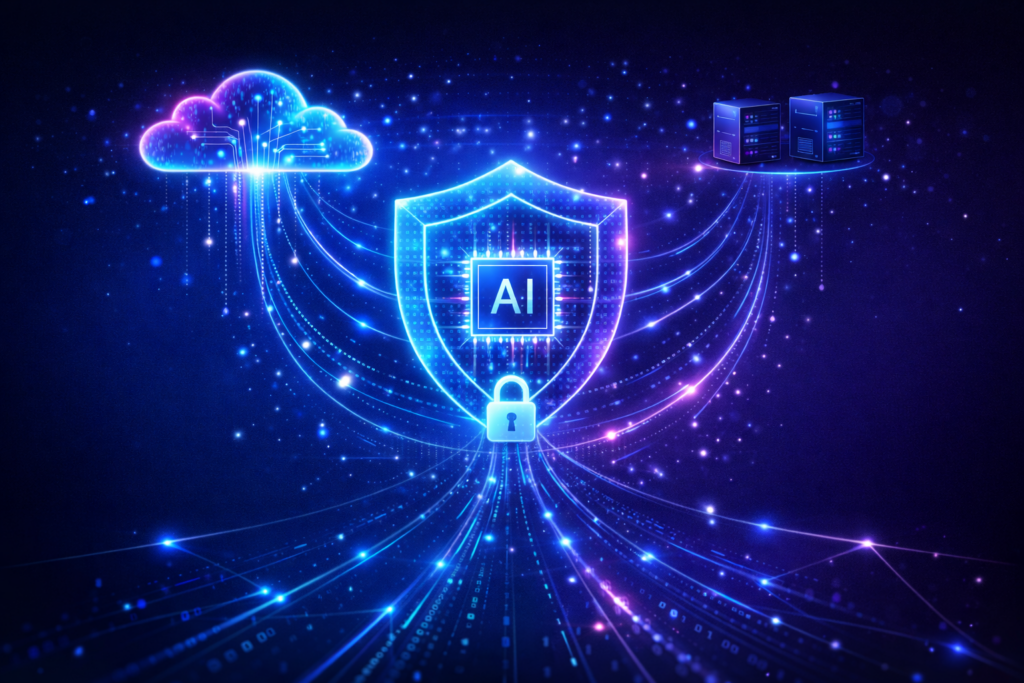
The Problem with Traditional Cloud Architecture
Cloud computing transformed businesses, but it introduced one limitation:
Distance
Data must travel long routes to centralized data centers.
Example:
A user in Mumbai accessing a server located in another continent experiences unavoidable transmission delay.
As businesses adopt real-time applications like AI, IoT, automation, and smart analytics, traditional cloud-only models become insufficient.
What Are Edge-Integrated IT Solutions?
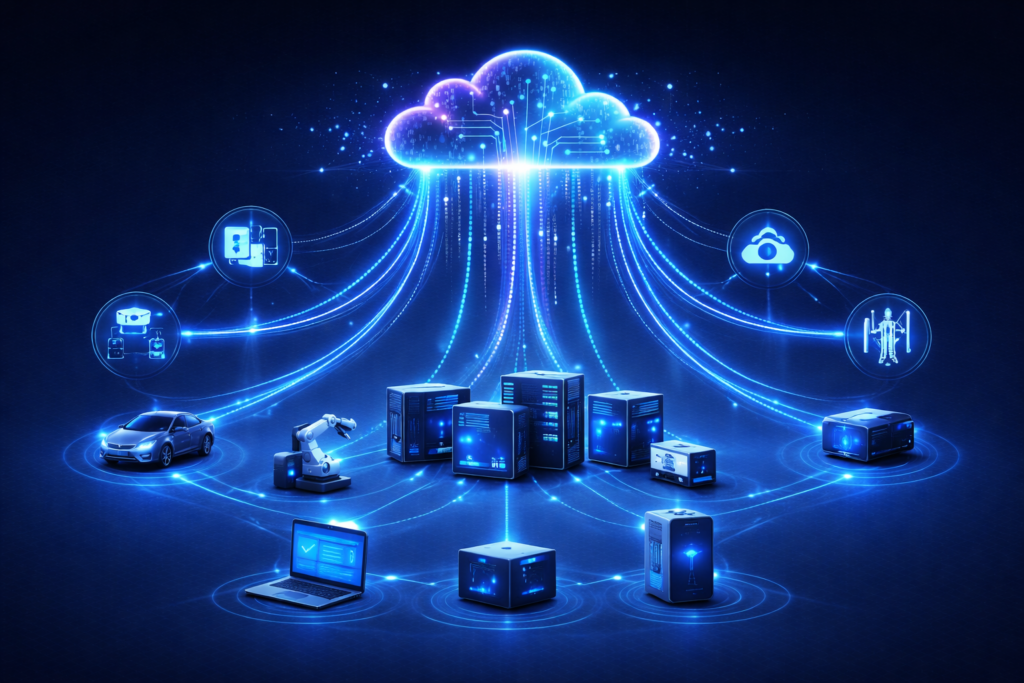
Edge-Integrated IT combines cloud computing with edge computing, where data processing happens closer to the user or device.
Instead of sending all data to a distant cloud:
✅ Processing happens locally
✅ Only essential data moves to the cloud
✅ Responses become nearly instant
Think of it as moving intelligence closer to where action happens.
How Edge Integration Reduces Latency
Local Data Processing
Edge servers analyze data near the source, reducing travel time.
Real-Time Decision Making
Critical operations occur instantly without waiting for cloud response.
Smart Data Routing
Only meaningful data is transmitted to central systems.

Key Benefits of Edge-Integrated IT Solutions
Ultra-Fast Performance
Applications respond in milliseconds, improving productivity and user experience.
Enhanced Security
Sensitive data can remain local, reducing exposure risks.
Improved Reliability
Operations continue even if cloud connectivity is interrupted.
Cost Optimization
Reduced bandwidth and cloud processing expenses.
AI & Automation Enablement
Real-time AI applications become practical and scalable.
Real-World Use Cases
Banking & Finance
- Instant fraud detection
- Real-time transaction verification
Retail & E-commerce
- Faster checkout systems
- Personalized recommendations
Healthcare
- Remote patient monitoring
- Instant diagnostic analysis
Manufacturing (Industry 4.0)
- Predictive maintenance
- Smart factory automation
Transportation & Logistics
- Fleet tracking
- Real-time route optimization
Edge + Cloud: The Future IT Architecture
Modern enterprises are adopting a Hybrid Edge-Cloud Model:
| Traditional Cloud | Edge-Integrated IT |
|---|---|
| Centralized processing | Distributed processing |
| Higher latency | Low latency |
| Bandwidth heavy | Optimized traffic |
| Slower real-time response | Instant decision-making |
This architecture delivers both scalability and speed.

Signs Your Business Has a Latency Problem
You may need edge solutions if:
- Applications feel slow despite upgrades
- Customers complain about loading times
- Real-time analytics lag
- IoT devices respond slowly
- Cloud costs keep increasing
How to Transition to Edge-Integrated IT
Step 1: Analyze Latency Bottlenecks
Measure application response times and network delays.
Step 2: Identify Real-Time Workloads
Focus on operations needing instant processing.
Step 3: Deploy Edge Nodes
Install localized computing infrastructure.
Step 4: Integrate with Cloud Platforms
Maintain centralized analytics and storage.
Step 5: Continuous Optimization
Monitor performance and scale strategically.
The Competitive Advantage of Low Latency
Businesses that reduce latency gain:
- Faster customer interactions
- Better operational efficiency
- Improved digital experiences
- Stronger competitive positioning
In a world driven by instant gratification, speed equals trust.
Conclusion
Latency is not just a technical issue — it is a business risk hiding inside digital infrastructure.
As organizations move toward AI, automation, and real-time services, traditional centralized systems cannot keep up with performance expectations.
Edge-Integrated IT Solutions bridge the gap between speed and scalability, enabling businesses to operate faster, smarter, and more efficiently.
Companies that act now will lead the next phase of digital transformation — while others struggle with invisible delays.
FAQs (SEO Boost Section)
What is latency in business IT?
Latency is the delay between a request and system response, impacting performance and user experience.
How does edge computing reduce latency?
By processing data closer to users instead of distant cloud servers.
Is edge computing replacing cloud computing?
No. Edge complements cloud systems to create faster hybrid infrastructure.
Which industries benefit most from edge solutions?
Finance, healthcare, retail, manufacturing, logistics, and smart city applications.