
Introduction: The Attention Crisis
Consumers are overwhelmed.
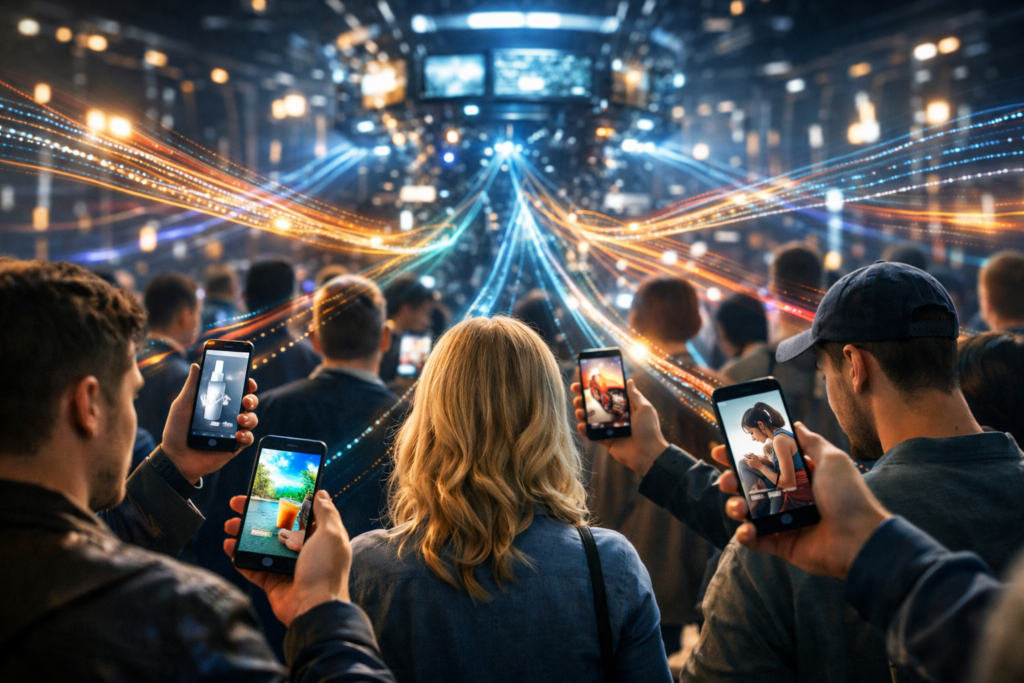
By 2026, the average user will be exposed to thousands of ads every day across social media, search engines, OTT platforms, websites, and mobile apps.
Yet, conversion rates are falling while ad costs continue to rise.
This is the era of ad fatigue — where traditional advertising no longer captures attention, and businesses pay more for less impact.
But there is a solution:
AI-generated video assets.
What Is Ad Fatigue?
Ad fatigue happens when your audience repeatedly sees the same content and stops engaging with it.
Symptoms include:
- Falling click-through rates (CTR)
- Rising cost per click (CPC)
- Declining conversions
- Lower return on ad spend (ROAS)
In 2026, ad fatigue is no longer a creative problem — it’s a growth crisis.
Why Traditional Ads Are Failing
Most brands still rely on:
- A few static creatives
- One or two video variations
- Monthly campaign refresh cycles
Meanwhile, consumer attention resets every few hours.
Your marketing system simply cannot keep up manually.
How AI-Generated Video Changes Everything
AI-powered creative engines can now:
- Generate hundreds of video variants from one campaign
- Personalize content by audience behavior, location, and intent
- Optimize messaging in real time
- Refresh ads automatically before fatigue sets in
Instead of one ad, you now run thousands of micro-campaigns.
The Impact on Customer Acquisition Cost (CAC)
Businesses using AI-generated video are seeing:
| Metric | Improvement |
|---|---|
| CTR | +35% to +80% |
| CPC | −20% to −40% |
| Conversion Rate | +25% to +60% |
| CAC | Reduced by 30–50% |
Why?
Because customers no longer feel advertised to —
they feel understood.
The New Growth Engine: Creative at Scale
In 2026, growth is no longer limited by:
- Media budget
- Platform reach
- Team size
It is limited by creative velocity.
AI gives brands infinite creative capacity —
and infinite testing power.

Who Benefits Most?
AI-generated video is transforming:
- E-commerce
- SaaS & tech companies
- Real estate & finance
- Healthcare & education
- Startups & enterprise brands
If your business depends on paid growth,
this shift is unavoidable.
Final Thought: The End of Guesswork Marketing
Marketing in 2026 is not about intuition.
It is about:
- Data
- Automation
- Personalization
- Continuous optimization
AI-generated video assets are not a trend.
They are the foundation of profitable growth.
Frequently Asked Questions (FAQ)
1. What is ad fatigue in simple words?
Ad fatigue is when people see the same advertisement too many times and stop paying attention to it. This leads to lower engagement, fewer clicks, and higher advertising costs.
2. Why is ad fatigue becoming worse in 2026?
Because people consume more content across more platforms than ever before. Their attention resets faster, while most brands still run limited creative variations.
3. How do AI-generated videos reduce customer acquisition cost (CAC)?
AI-generated videos continuously create fresh, personalized ad content, improving engagement and conversions while lowering ad spend — directly reducing CAC.
4. Is AI-generated video only for big companies?
No. Startups and small businesses benefit even more because AI replaces large creative teams and allows affordable creative scaling.
5. What platforms work best with AI-generated video ads?
Meta (Facebook & Instagram), YouTube, Google Ads, LinkedIn, and OTT platforms all perform significantly better with AI-powered video creatives.
6. How many ad creatives should a brand run to avoid ad fatigue?
Modern campaigns often run 50–500 creative variations per month, something only possible through AI automation.
7. Does AI replace human marketers?
No. AI multiplies human effectiveness. Marketers focus on strategy while AI handles execution at scale.
8. Is AI-generated video the future of advertising?
Yes. It is quickly becoming the standard foundation for profitable, scalable marketing.