
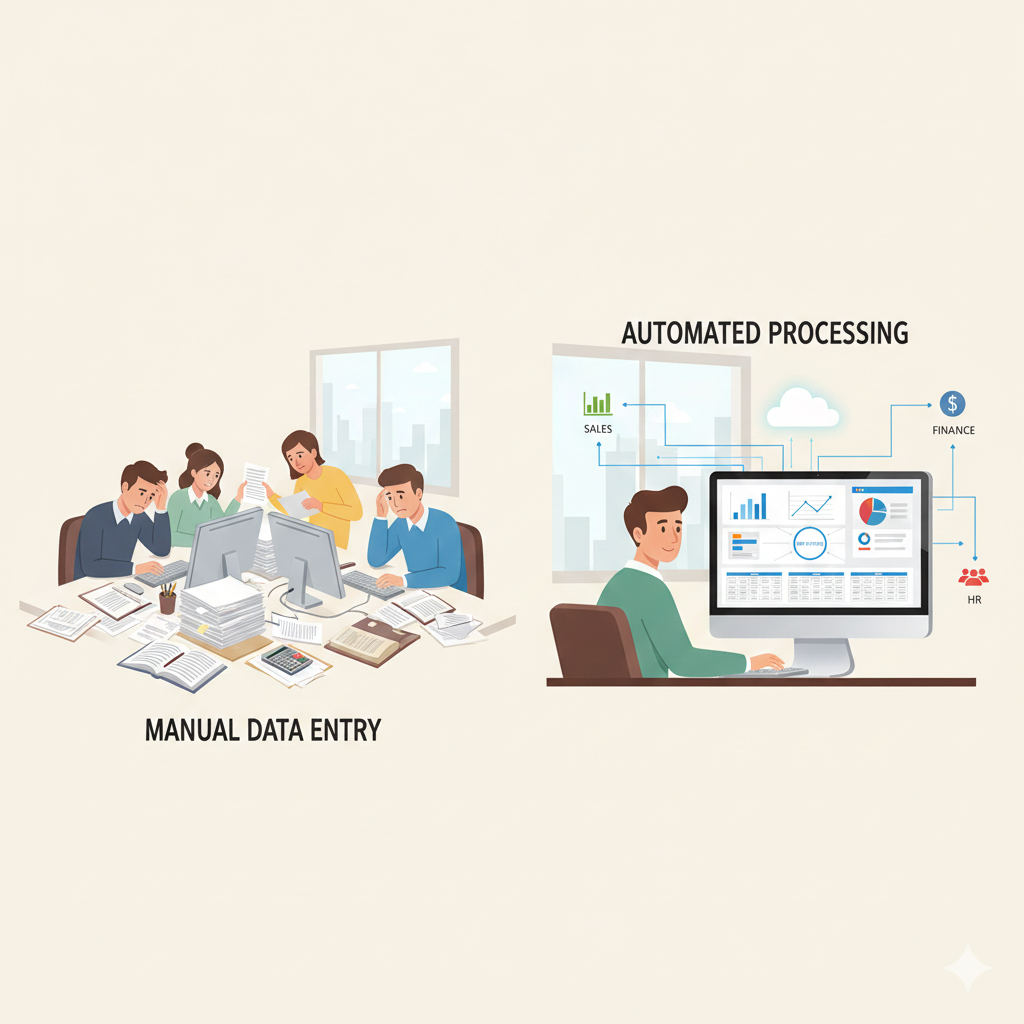
Manual data entry.
Repetitive reconciliations.
Late-night error corrections.
Entire teams fixing problems that should never exist in the first place.
At Pulse Analytix, we believe the next evolution of ERP is clear:
Systems should heal themselves.
Welcome to the era of Self-Healing ERPs.
The Hidden Cost of “Human-in-the-Loop” ERPs
Most organizations don’t realize how much time and money they lose due to manual intervention inside their ERP systems.
Typical symptoms include:
- Sales, finance, and operations teams entering the same data across multiple modules
- Mismatched records between CRM, ERP, and accounting systems
- Delayed reporting due to data validation issues
- Error correction cycles that consume hours—or days—every month
These aren’t just inefficiencies. They are structural weaknesses.
Every manual touchpoint increases:
- The probability of error
- The cost of correction
- The delay in decision-making
Traditional ERPs were never designed to adapt, only to record.
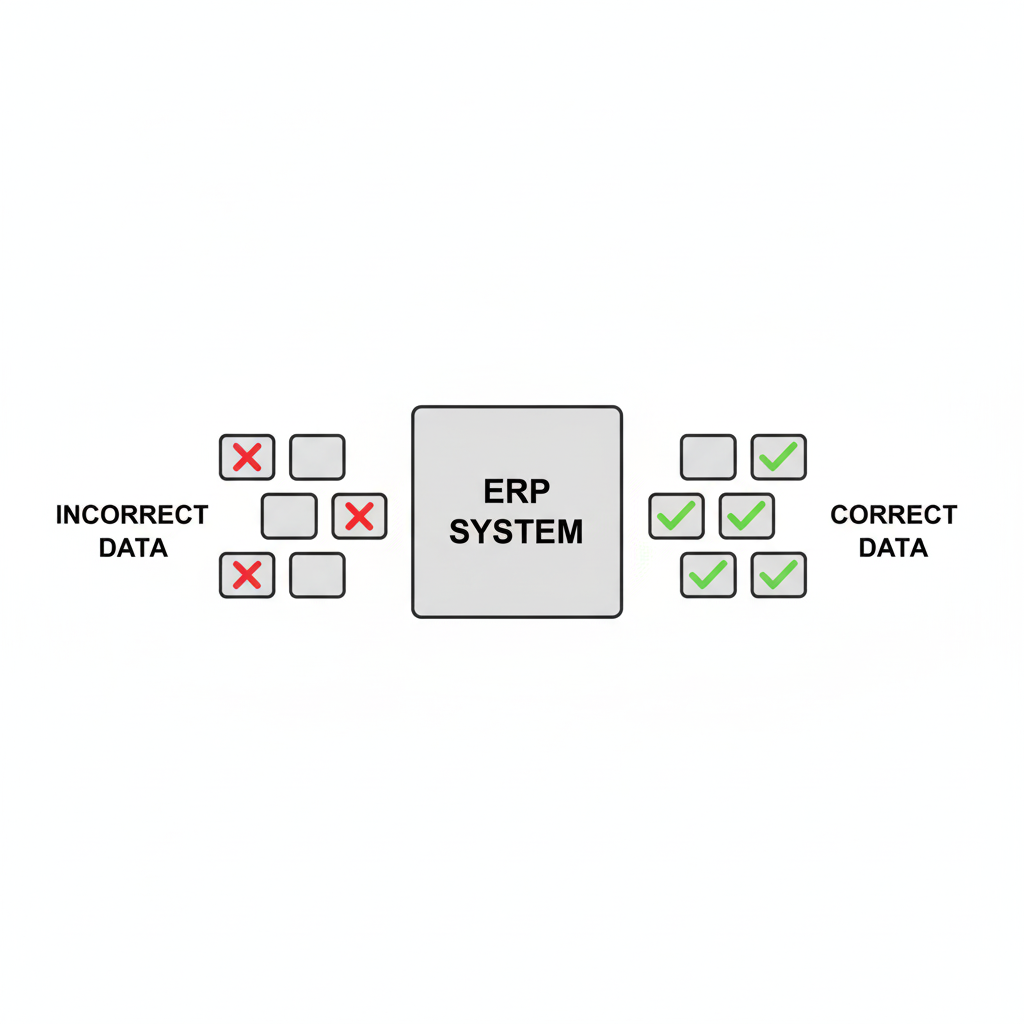
What Is a Self-Healing ERP?
A Self-Healing ERP is an intelligent system that can:
- Detect anomalies in real time
- Understand context using AI and rules engines
- Automatically correct errors or trigger safe remediation workflows
- Learn from past corrections to prevent recurrence
In simple terms:
The system fixes itself before humans even notice the problem.
This isn’t automation alone.
This is autonomous operational intelligence.
How Pulse Analytix Builds Self-Healing ERP Architectures
Self-healing is not a single feature—it’s an ecosystem. PulseAnalytix approaches it through four tightly integrated layers.
1. Intelligent Data Ingestion (Zero Manual Entry)
We eliminate manual data entry at the source by:
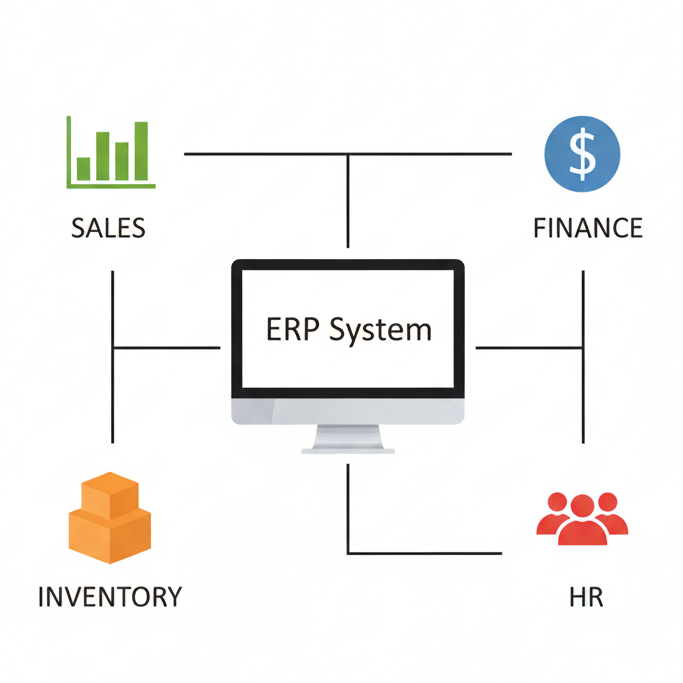
- Integrating ERP systems directly with CRMs, banking APIs, inventory platforms, and third-party tools
- Using AI-based data extraction for invoices, purchase orders, and legacy documents
- Applying validation rules before data enters the ERP
Result:
✔ Clean data from day one
✔ No downstream correction cycles
2. Real-Time Error Detection Engines
Instead of discovering errors at month-end, our systems:
- Continuously monitor transactions
- Identify pattern deviations, duplication, and logical inconsistencies
- Flag issues the moment they occur
This allows errors to be:
- Auto-corrected
- Routed for approval
- Or rolled back safely
Before they impact reporting or compliance.
3. AI-Driven Auto-Correction Workflows
This is where ERP systems truly begin to heal.
Pulse Analytix implements:
- Rule-based correction for known scenarios
- Machine learning models for complex pattern recognition
- Context-aware decision engines that understand business logic
For example:
- If a vendor invoice doesn’t match historical pricing, the system validates it automatically
- If a journal entry breaks accounting logic, it’s corrected or quarantined instantly
- If master data changes conflict with downstream modules, dependencies are auto-aligned
No human firefighting required.
4. Continuous Learning and Prevention
Every resolved issue becomes training data.
Over time, the ERP:
- Learns which errors recur
- Understands root causes
- Adjusts rules and models automatically
The system doesn’t just fix problems — it prevents them from happening again.
This is what makes it self-healing, not just automated.
The Business Impact: Beyond Efficiency
Organizations using self-healing ERP architectures experience measurable transformation:
🔹 Operational Impact
- 70–90% reduction in manual data entry
- Near-elimination of reconciliation cycles
- Faster close periods
🔹 Financial Impact
- Lower operational costs
- Fewer audit issues
- Reduced dependency on corrective manpower
🔹 Strategic Impact
- Real-time, trustworthy data
- Faster executive decision-making
- ERP becomes a growth engine—not a bottleneck
Why This Matters Now (Not Later)
As businesses scale, ERP complexity increases exponentially.
Adding more people to manage broken processes is no longer sustainable.
With:
- AI maturity
- API-driven ecosystems
- Cloud-native ERP platforms
Self-healing systems are no longer futuristic—they are inevitable.
The question is not if organizations will adopt them, but who will do it early enough to gain the advantage.
Why Pulse Analytix
PulseAnalytix doesn’t retrofit automation onto broken systems.
We redesign ERP ecosystems to be:
- Intelligent by default
- Autonomous where safe
- Human-led only where judgment is required
Our approach ensures:
- Minimal disruption to existing operations
- Maximum ROI within months—not years

Final Thought
Manual data entry and error correction were once accepted as “part of the process.”
They don’t have to be anymore.
Self-Healing ERPs represent the end of reactive operations and the beginning of truly intelligent enterprises.
And Pulse Analytix is building that future—today.