
Introduction: Welcome to the Age of Growth Systems
2026 is not the era of individual departments.
It is the era of growth systems.
Businesses no longer win by simply running ads or building websites. They win by creating an ecosystem where technology, marketing, data, and intelligence operate as one synchronized engine.
This is what we call The Symphony of Success — where IT and Marketing no longer play solo instruments, but perform together to create scalable growth.
At Pulse Analytix, we see it every day:
Companies that integrate their IT infrastructure with marketing strategy grow faster, convert better, and dominate their markets.
Why the Old Business Model is Breaking
Most companies still operate like this:
- Marketing launches campaigns
- IT manages servers and websites
- Data is scattered across tools
- Automation is weak or nonexistent
- Customer experience feels disconnected
The result?
- High advertising costs
- Low conversion rates
- Inconsistent growth
- No clear picture of customer behavior
In 2026, this model is not just inefficient — it is dangerous.
What Integrated Growth Really Means
Integrated IT & Marketing means:
This system includes:
- High-performance websites & applications
- Cloud infrastructure & cybersecurity
- SEO, paid advertising & content engines
- CRM & marketing automation
- AI-powered analytics & optimization
When these components operate together, growth becomes predictable, scalable, and controllable.
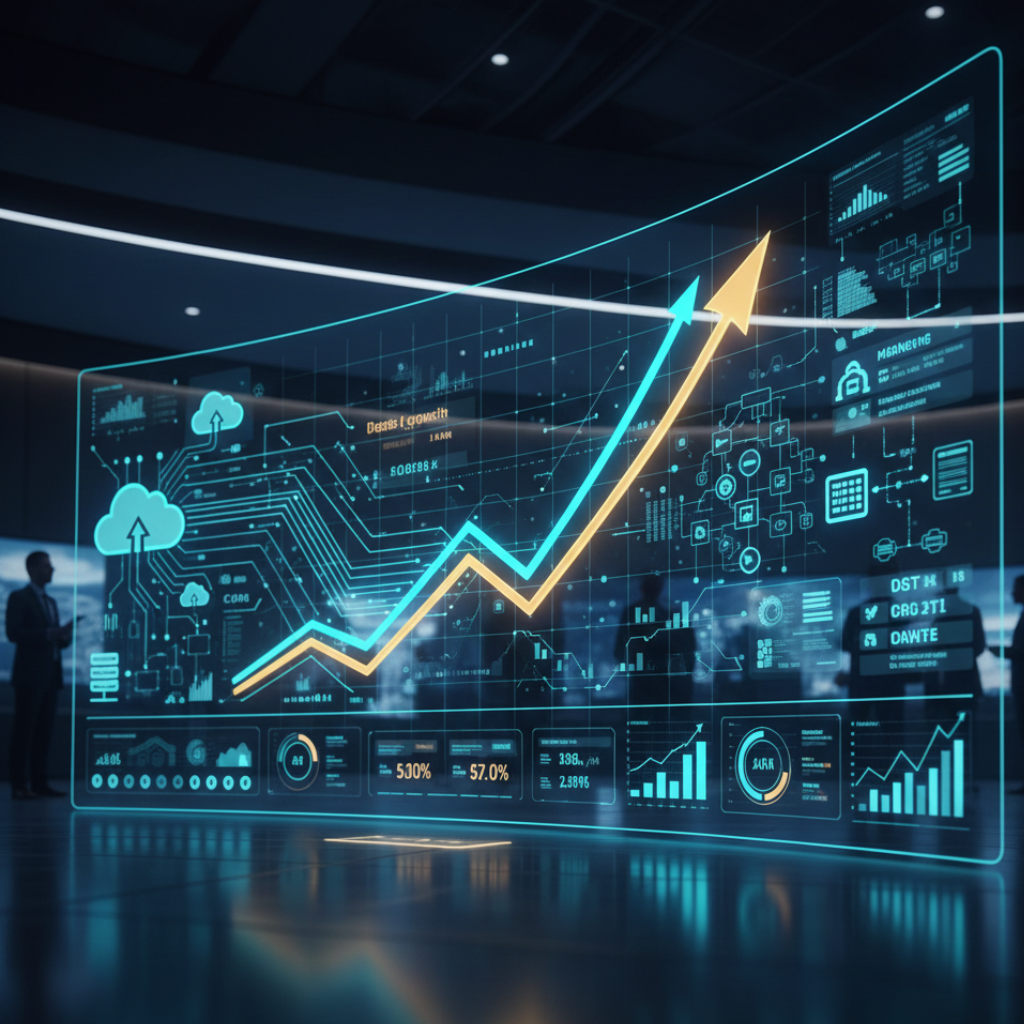
The 2026 Growth Stack
1. Technology Foundation
Your business infrastructure:
- Cloud & server architecture
- Website & mobile app development
- UI/UX optimization
- Cybersecurity & compliance
- ERP & CRM systems
- API integrations & automation pipelines
2. Marketing Engine
Your customer acquisition & brand growth system:
- Search Engine Optimization (SEO)
- Google Ads & performance marketing
- Social media marketing
- Content marketing & blogging
- Lead generation systems
- Email & WhatsApp automation
- Branding & digital strategy
3. Intelligence Layer
Your decision-making brain:
- AI analytics & dashboards
- Customer behavior tracking
- Predictive marketing models
- Conversion rate optimization
- Continuous performance tuning
When these three layers operate together, your business no longer chases growth.
Growth starts chasing your business.
How Pulse Analytix Delivers the Full Symphony
At Pulse Analytix, we provide an end-to-end growth ecosystem under one roof:
🧩 IT Solutions
- Custom Website Development
- Mobile App Development
- UI/UX Design
- Cloud Solutions & Migration
- Cybersecurity Services
- CRM & ERP Implementation
- System Automation
- AI Business Solutions
- Data & Analytics Platforms
- Software Consulting
📈 Digital Marketing Services
- Search Engine Optimization (SEO)
- Google & Meta Ads Management
- Performance Marketing
- Social Media Marketing
- Content Strategy & Blogging
- Lead Generation Systems
- Email Marketing & Automation
- Brand Strategy & Positioning
- Funnel Design & Optimization
🧠 Growth & Intelligence Services
- AI-powered Marketing Automation
- Predictive Analytics
- Customer Journey Mapping
- Conversion Rate Optimization
- Business Intelligence Dashboards
- Growth Consulting
This unified model allows us to scale businesses faster, smarter, and more profitably.

Real-World Growth Transformation
A company running ads without integration typically faces:
- Slow websites
- Broken tracking
- Poor automation
- Generic messaging
- Rising ad costs
After full integration with Pulse Analytix:
- Website speed increases
- Conversion rates double
- Cost per lead drops
- Sales pipelines become automated
- Revenue becomes predictable
This is not luck.
This is systems engineering for growth.
Why 2026 Makes Integration Mandatory
The business environment of 2026 is shaped by:
- AI-first customer journeys
- Zero patience digital consumers
- Rising advertising costs
- Data privacy regulations
- Hyper-competitive markets
- Automation replacing manual work
In this environment, companies that operate in silos cannot survive.
Integration is no longer a competitive advantage.
It is a requirement for survival.
How Businesses Can Start Today
- Audit your current IT & marketing systems
- Fix performance foundations (website, tracking, data)
- Connect CRM, ads, analytics & automation
- Introduce AI & intelligence layers
- Build a continuous optimization loop
With the right partner, this transformation happens faster than most companies expect.
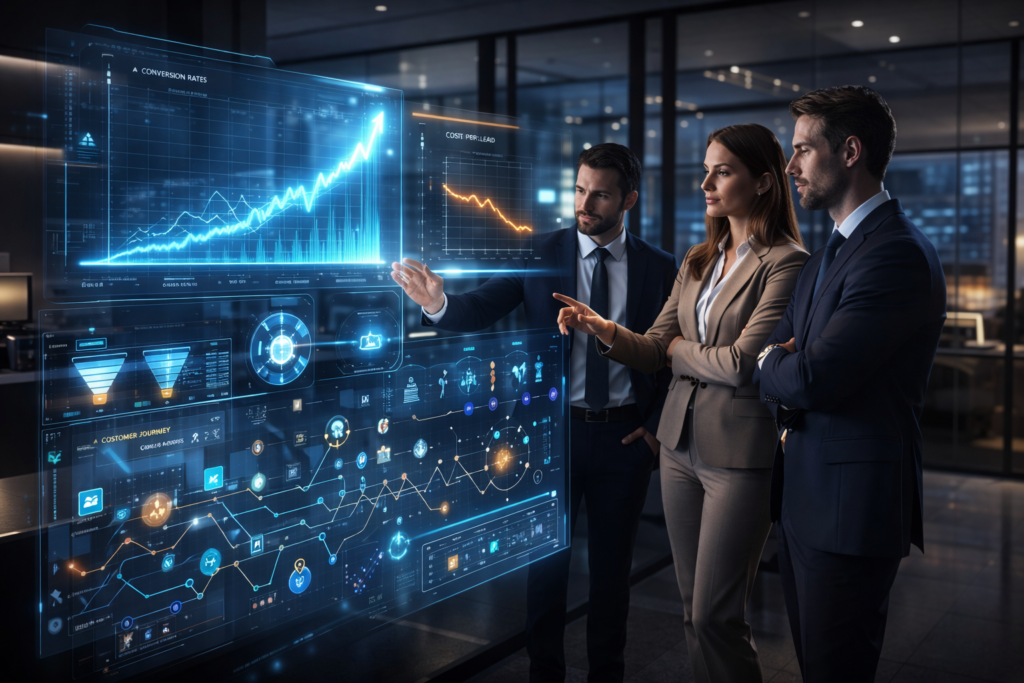
Conclusion: The Symphony Effect
When IT builds the stage,
Marketing conducts the audience,
Data keeps the rhythm,
AI fine-tunes every note —
You don’t just have a business.
You have a growth orchestra.
And in 2026, only symphonies scale.
Frequently Asked Questions (FAQ)
Q1. Why is integrating IT and Marketing so important?
Because growth depends on speed, data, and automation — which only work when IT and marketing systems operate together.
Q2. Can small businesses benefit from this model?
Absolutely. Integration reduces costs, improves conversions, and builds sustainable growth for businesses of all sizes.
Q3. What industries does Pulse Analytix serve?
Startups, SMEs, enterprises, eCommerce, real estate, finance, healthcare, education, and technology firms.
Q4. How long does integration take?
Initial transformation typically takes 60–90 days, with continuous optimization afterward.
Q5. Does Pulse Analytix handle both IT and Marketing internally?
Yes. We provide complete IT solutions, digital marketing, automation, and AI services under one roof.
I love how you’ve outlined the importance of integrating IT and marketing—it’s really the future of business growth. It’s clear that companies who are still running with siloed departments will struggle to keep up in 2026. What do you think is the biggest challenge for companies in making this shift?
Thank you — that’s a great question.
In most companies, the biggest challenge isn’t technology, it’s mindset and structure.
IT and marketing teams are used to working with different goals, tools, and KPIs, so aligning them around a shared growth objective takes leadership, process redesign, and clear communication.
Once companies break these silos and connect data, automation, and customer insights across both teams, they usually see faster decision-making, better customer experiences, and more predictable growth.
2026 will reward businesses that treat IT + marketing as one growth engine, not two separate departments.
Follow for more insights, strategies, and upcoming blogs on the future of business and AI.